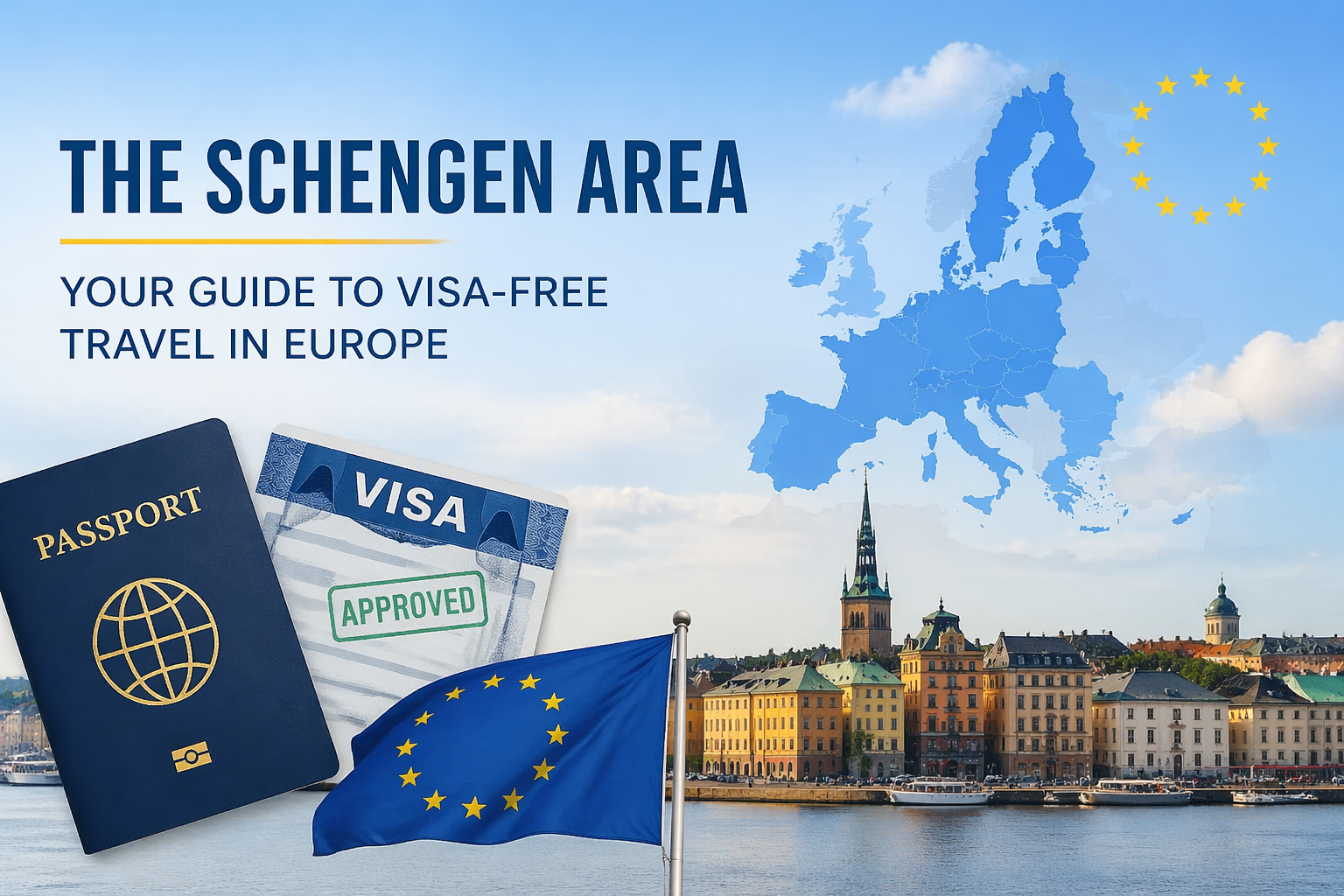
The Schengen Area stands as one of Europe’s most traveler‑friendly achievements — a region where visitors can move freely across borders without constant passport checks and hassles. With dozens of countries participating and countless unforgettable experiences waiting across the continent, understanding how Schengen works is essential for planning an epic European trip.
🇪🇺 What Is the Schengen Area?
At its core, the Schengen Area is a group of European countries that have abolished routine border controls between one another. This means that once you enter any one Schengen member state, you can travel to nearly all others without showing your passport at every border — a dream setup for vacationers, students, and business travelers alike.
The name comes from the village of Schengen in Luxembourg, where the original agreement was signed in the 1980s. Since then, this system has grown into one of the world’s most successful examples of international travel cooperation.
🗺️ Countries You Can Visit Within Schengen
Today, the Schengen Area includes over 25 European countries, spanning both EU and non‑EU nations. These members share a unified approach to travel and border policy, creating a seamless zone for visitors.
Some of the most popular destinations in the Area include:
- Austria – Vienna’s imperial palaces & Alpine villages
- France – Paris, the Riviera, Loire castles
- Italy – Rome, Venice, Amalfi Coast
- Germany – Berlin, Bavaria, Black Forest
- Spain – Barcelona, Andalusia, Mediterranean beaches
- Netherlands – Amsterdam’s canals and museums
- Sweden – Stockholm’s Old Town & scenic archipelagos
…and many more.
Each destination offers its own mix of culture, history, natural beauty, and modern city life — and you can explore them all once you’re inside the Schengen Area without border checkpoints slowing you down.
🎟️ Travel Rules: What You Need to Know
Here are the key practical points to understand before you plan your Schengen journey:
✔️ Schengen Visa Basics
Many visitors need a Schengen Visa to enter these countries. A standard short‑stay visa lets you travel across all member states for up to 90 days within a 180‑day period — no separate visas required for individual countries.
✔️ One Visa, Many Borders
A Schengen Visa is valid throughout the region. This means if you land in Paris, you can continue on to Berlin, Amsterdam, Rome, or Stockholm without showing your passport at every border.
✔️ Who Uses the System?
The freedom to move applies to both EU citizens and non‑EU visitors who meet visa requirements. Whether you’re backpacking across Europe or attending business meetings in different cities, Schengen simplifies your travel.
✈️ How Schengen Benefits Travelers
Here’s why the Schengen Area is a game‑changer:
- Smooth travel: Fewer border stops and less paperwork.
- More flexibility: Plan multi‑country routes without extra visas.
- Efficient transport: Trains, buses, flights and ferries all benefit from freer movement.
- Unified rules: Harmonized travel regulations across member states.
🌍 Planning Your European Adventure
Whether you’re dreaming of historic cities, coastal towns, dramatic landscapes, or world‑famous cuisine, the Schengen Area makes exploring Europe more connected than ever. Start by researching visa requirements for your nationality, choose your key destinations, and build an itinerary that takes advantage of this one‑of‑a‑kind travel zone.
Want More Travel Tips?
If you’re preparing for your first Schengen trip, keep an eye out for local travel guides, updated visa policies, and even destination‑specific tips to make your journey unforgettable. Europe awaits — and once you step into Schengen, adventure truly knows no borders.
