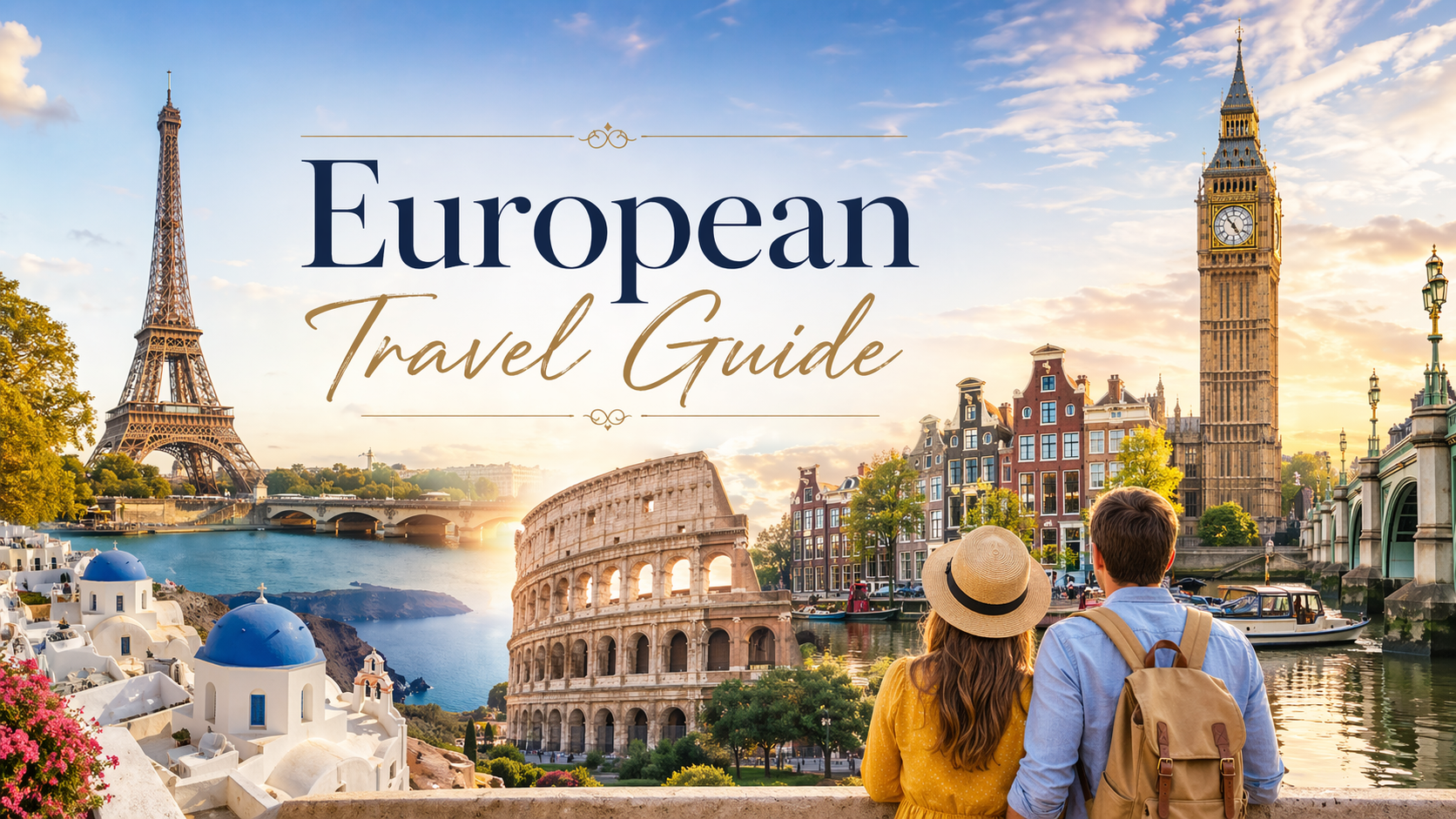
Explore, Experience & Plan Your Best European Adventure
Europe is one of the world’s most captivating continents — a tapestry of history, culture, food and scenery that draws millions of visitors every year. Whether it’s your first trip or your tenth, planning ahead makes every moment more rewarding. From iconic cities and scenic seaside islands to off‑the‑beaten‑path gems and budget‑friendly travel tips, this guide helps you design your perfect European journey.
How to Choose Where to Go in Europe
Europe may be compact, but it’s incredibly diverse. Travelers often divide the continent into Western Europe and Eastern Europe, each offering distinct experiences:
Western Europe includes travel favorites like France, Italy, Spain and England. Here you’ll find world‑famous cities — Paris, Rome, Barcelona and London — with historic landmarks, rich museums and excellent public transport. A Schengen visa simplifies travel between 26 European countries, most of which are in the West. The euro is also widely accepted, and English is common in major destinations, making travel smoother for international visitors.
Eastern Europe offers equally memorable experiences with fewer crowds and more affordable prices. From Prague and Budapest to Croatia and Slovenia, this region delivers breathtaking landscapes, charming towns and a welcoming atmosphere. Keep in mind that transportation can be less frequent outside big cities, and local currencies vary by country.
Must‑Visit European Destinations
Whether you love history, architecture, food or culture, Europe’s iconic cities should be on your list:
Paris, France
The “City of Lights” sparkles with world‑class art, dazzling architecture and charming cafes. Must‑visit spots include the Eiffel Tower, Arc de Triomphe and the Louvre Museum — home of the Mona Lisa. Don’t miss a stroll through Montmartre or a pastry break at a Parisian boulangerie.
Rome, Italy
Rome is an open‑air museum. From the ancient Colosseum and Palatine Hill to the majestic St. Peter’s Basilica and the Pantheon, every corner tells a story. Throw a coin into the Trevi Fountain and soak up local life with espresso and gelato in vibrant piazzas.
London, England
A blend of history and modern energy, London invites you to explore royal palaces, world‑class museums and iconic streets. Witness the Changing of the Guard, ride the London Eye and stroll across Abbey Road for Beatles history.
Amsterdam, Netherlands
Famous for canals and bicycles, Amsterdam is a photographer’s dream. Visit the Van Gogh Museum, the Anne Frank House, and don’t miss a scenic bike ride over historic bridges.
Santorini, Greece
For postcard‑perfect views, Santorini tops the list. Whitewashed buildings cling to volcanic cliffs overlooking sapphire waters. Sunset at the caldera and local wine tastings make this island unforgettable.
Hidden European Gems Worth Exploring
Europe’s lesser‑known destinations often reward curious travelers with unforgettable experiences:
Basel, Switzerland – A medieval city with Gothic cathedrals, art museums and a lively carnival celebration.
Bovec, Slovenia – Outdoor haven in the Julian Alps with rafting, hiking and skiing.
Split, Croatia – A historic coastal city centered around Diocletian’s Palace with lively streets, waterfront dining and rich heritage.
Where to Stay in Europe
Europe offers accommodation for every style and budget:
- Hotels & Boutique Hotels: Classic comfort in city centers.
- Bed & Breakfasts: Cozier, often more affordable with local charm.
- Hostels: Budget‑friendly and social — great for solo travelers.
- Homestays: Stay with local hosts to experience culture firsthand.
- Castles & Historic Stays: For a once‑in‑a‑lifetime experience in renovated castles and chateaus.
- Villas & Manor Houses: Luxury and privacy for special trips.
Getting Around Europe
Europe’s transport network makes moving between cities efficient and varied:
Local transport: Subways, buses, trams and bike rentals are common in major cities.
Long‑distance:
- Trains & Eurail Passes: Ideal for scenic travel across borders.
- Buses: Budget‑friendly options like FlixBus.
- Budget Airlines: Quick flights between countries with carriers like Ryanair or EasyJet.
- Car Rentals: Great for exploring rural areas and off‑beat places.
European Travel Culture & Tips
Europeans value politeness and local etiquette — simple greetings go a long way. Learning a few phrases in local languages is always appreciated. Larger cities usually offer multilingual signs and services.
Tipping varies by country, but it generally acknowledges good service without the heavy expectations found elsewhere.
How to Travel Europe on a Budget
Europe doesn’t have to be expensive. Smart planning helps:
- Visit in Shoulder Seasons: Fall and early spring often bring lower prices.
- Free Walking Tours: Many cities offer budget‑friendly tours.
- Explore Eastern Europe: Costs for food and stays tend to be lower.
- Skip Touristy Restaurants: Local eateries deliver authentic flavor for less.
- Museum Passes: City passes often save on attractions.
What to Pack for Europe
Packing wisely boosts your comfort and convenience:
- Comfortable walking shoes
- Universal power adapter
- Passport & travel documents
- Schengen visa (if required)
- Travel insurance for peace of mind
Always check weather forecasts for your destinations before you pack.
Helpful Travel Tools & Resources
Use travel apps and sites to make your trip smoother:
Apps:
- TripIt (organize itineraries)
- CityMapper (city transit)
- Google Translate (language help)
Search Engines:
- Kayak (flights & hotels)
- Skyscanner (airfare)
- Omio (trains & buses)
- Airbnb & Hostelworld (lodging)
Travel Advice:
- Rick Steves (Practical guidance)
- Atlas Obscura (unique experiences)
- WikiVoyage (travel info)
Europe offers unforgettable experiences for every style of traveler. With a bit of planning and an open heart, your European adventure can be every bit as magical as you imagine. Start with your must‑visit destinations and build toward the journey of a lifetime!
